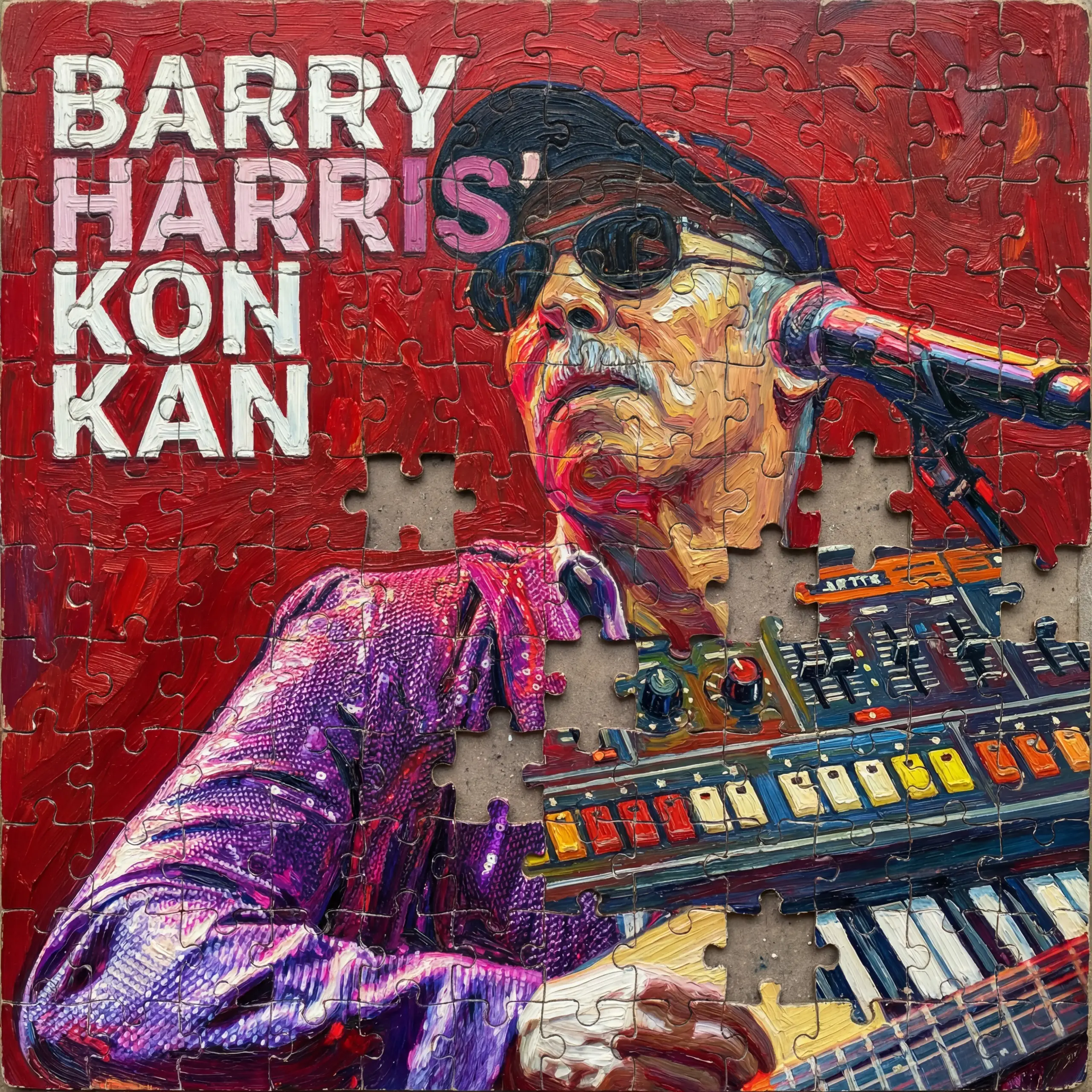
BARRY HARRIS’ KON KAN
ENTER THE MUSICAL UNIVERSE OF BARRY HARRIS
Barry Harris’ work bridges melodic synth-pop songwriting and club-driven electronic production, an ongoing creative journey shaped by global hits, reinvention, and continually evolving remixes.
Barry Harris Bio
Barry Harris is a Toronto-based Canadian producer, artist, musician, singer-songwriter, DJ, and remixer whose work connects synth-pop songwriting with club-driven electronic production.
He is best known as the creator of Barry Harris’ Kon Kan, built on strong melodic structure, disciplined arrangements, and a producer’s attention to detail. This section looks deeper at Harris’s musician-first approach, and how that perspective shapes everything he writes and produces.
Canadian Producer
Harris is known for a studio-first, problem-solving mindset: sound design and arrangement choices that serve the song’s center of gravity. Across synth-pop, dance, and rock-adjacent work, the consistent signature is disciplined structure and clear intent.
Artist
As an artist, Harris isn’t only “behind the glass.” He shapes the identity and presentation of the work across eras and projects in the Barry Harris universe. The goal isn’t trend-chasing; it’s authorship, so the track communicates the same idea in a club, on radio, or on headphones.
Singer & Songwriter
His writing favors structure and economy: ideas land quickly, stay memorable, and leave room for atmosphere. Melodies are direct but not obvious, with restraint over excess. That balance between accessibility and edge is central to the catalog.
Grammy Award Certificate
The National Academy of Recording Arts & Sciences recognized Barry Harris with a certificate for his role as Remixer on the Grammy Award-winning recording “Carry On” by Donna Summer & Giorgio Moroder, awarded Best Dance Recording at the 1997 ceremony.
ASCAP Rhythm & Soul Music Award
Barry Harris received an ASCAP Rhythm & Soul Music Award in 2001 for writing “Dive in the Pool,” which topped the dance charts in 2000. Presented in Atlanta, the award recognizes his impact and achievement as a songwriter on the international stage.
Musician
Before the roles and credits, the foundation is musical: feel, timing, and arrangement choices that serve the song, not the gear. Whether building a hook, shaping bass movement, or deciding what not to add, the decisions come from musicianship: tension and release, dynamics, and the emotional weight of small changes.
DJ / Remixer
In the DJ/remixer lane, the focus becomes impact: how a record moves in a room, how it hits on the downbeat, and how it holds attention through change. His most visible club work is Thunderpuss with Chris Cox, built for lift, drama, and movement while keeping the song’s core intact.
Projects And Creative Lanes
WHAT’S BARRY DOING NOW — 2026
Barry Harris is currently writing, developing, producing, and recording new music, with releases scheduled throughout the year.
THUNDERPUSS — 1997 TO PRESENT
Thunderpuss is Barry Harris alongside Chris Cox and represents the remix and club lane: high-energy, DJ-aware productions built for drama and impact. This work reflects Harris and Cox’s deep understanding of how club records behave in rooms, not just on headphones.
OUTTA CONTROL — 1995 TO 1997
Outta Control captures a more experimental, collaborative club chapter. The emphasis shifts toward Eurodance documenting an era where electronic projects evolved fluidly.
BARRY HARRIS’ KON KAN — 1988 TO PRESENT
Barry Harris’ Kon Kan is the primary artist identity created by Harris originally in 1988, where pop songwriting and electronic production meet in a distinct voice. It remains the most direct expression of his musical and writing instincts.
Timeline
2026 New Releases
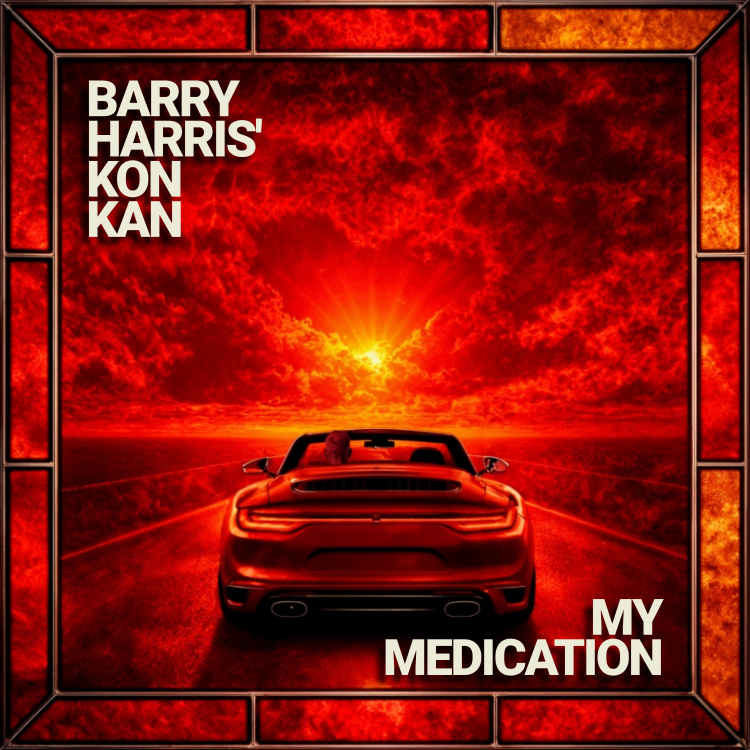
My Medication
My Medication is the latest release from Barry Harris, marking a new chapter in his ongoing body of work.
The track blends electronic production with a restrained, song-first approach, reflecting Harris’s continued focus on mood, structure, and clarity.
Reach Out To
Barry Harris
For Music
Licensing
Music Licensing & Catalog Inquiries
Barry Harris’s recordings are available for licensing in film, television, advertising, and other media.
For sync licensing, catalog clarification, or rights and metadata inquiries, please use the contact information provided on this site.
This website also connects verified listening links for Barry Harris and his primary projects, serving as the official point of reference for supervision and licensing matters.
JUNO Award “Firsts” + 1989 #1 Documentation
Barry Harris is a Canadian record producer, DJ, remixer, singer, and songwriter best known for creating the electronic and synth-pop hit “I Beg Your Pardon (I Never Promised You a Rose Garden)” in 1988. In 1990, his project won the JUNO Award for Best Dance Recording for the same track.
Based in Toronto, Harris emerged during a pivotal period when pop songwriting and club culture began to intersect, helping define a crossover sound that reached international audiences.
Through his work, Barry Harris combined strong melodic structure with forward-thinking production techniques, early sampling, and club-influenced arrangements. The project achieved global recognition and industry acknowledgment, establishing Harris as both a songwriter and a studio-driven producer.
Beyond this early success, Harris has maintained an active presence in dance and electronic music through multiple collaborative and side projects, including Thunderpuss and Outta Control.
Across these projects, his work reflects a consistent focus on rhythm, structure, and evolving production approaches rather than fixed genre boundaries.
March 11, 1989 represents a landmark moment in Barry Harris’s career: holding the No. 1 position on the Billboard dance chart during a pivotal era for electronic and club music. The following scans document that achievement in its original trade publication context.
The electronic music project created by Barry Harris blends synth-pop songwriting with club-driven production. Emerging in 1988, it became known for melodic restraint, emotional clarity, and innovative studio techniques.
Today, the project remains an active artist identity, with select releases and catalog updates that reflect both its original aesthetic and a modern production approach.
Barry Harris (Solo)
Barry Harris’ solo catalog stands as a fully realized artistic lane within his larger creative universe. Separate from band structures and collaborative brands, these releases place his voice, writing, and production instincts directly at the center. The solo work is not a departure — it is a concentrated expression of the same discipline, melodic strength, and club intelligence that define his career.
The Club Anthem Foundation
At the core of the solo catalog are the club-driven releases that established Barry as a front-facing dance artist in his own right.
- Dive In The Pool (feat. Pepper Mashay)
- I Got My Pride (feat. Pepper Mashay)
- Beg For It
These tracks were not one-off singles. They generated extended remix cycles, international DJ support, and multiple reissues across formats and eras. Tribal, breakbeat, radio edits, club mixes, and later reworks (2010, 2K16) demonstrate catalog longevity and dance floor durability. The scale of remix participation reflects genuine club ecosystem traction rather than surface-level exposure.
The Songwriter-Forward Lane
Alongside the peak-hour anthems sits a more direct writing voice.
- Why’d Ya Let Her
- Filter Queen
- Funk Like Dat
- You’re Mine
- Need I Say More
These releases lean into topline clarity and lyrical directness. The production remains polished and electronic, but the emotional center is carried by melody and phrasing. This body of work highlights Barry not only as a producer of energy, but as a writer of narrative and character.
The Global Remix Platform
What Makes Your Heartbeat Faster represents a defining solo chapter. Issued in multiple parts with extensive international remix packages, it became a platform release — serviced broadly, reinterpreted widely, and extended through club circuits.
The depth of remix contributors signals something important: this was not just a track, but a fully activated dance property under Barry’s own artist name.
Catalog Reinvention
Rather than allowing past releases to sit dormant, the solo catalog has been strategically refreshed across decades.
- Dive In The Pool (2010 Edition)
- Dive In The Pool 2K16
- I Beg Your Pardon 2K14 (Edson Pride Remix)
- S’cream (Single and Remix Releases)
These reactivations bridge legacy and contemporary club culture, reinforcing relevance without relying on nostalgia. The approach is evolutionary, not archival.
A Parallel Identity
Viewed in total, the Barry Harris solo works represent:
- A sustained international club presence
- A remix culture footprint across multiple eras
- A songwriter-driven electronic identity
- Catalog longevity through reinvention
- A seamless bridge between artist, producer, and DJ
This is not a side project. It is a parallel artistic identity operating with consistency, scale, and intent — an independent body of work that continues to expand while remaining grounded in disciplined songwriting and club-forward production.
Thunderpuss
Thunderpuss is the dance music and remix alter ego of producers Barry Harris and Chris Cox, emerging from the North American club and remix scene of the late 1990s.
The production duo focused on high-energy dance remixes and club-driven productions, operating at the intersection of house, electronic dance music, and remix culture. Thunderpuss became widely known for extended mixes crafted for DJs and dancefloor audiences, while maintaining crossover potential for pop radio.
A defining Thunderpuss recording that balances introspective songwriting with electronic precision. Built around strong melodic structure and subtle rhythmic tension, the track reflects the project’s signature blend of pop accessibility and club sensibility.
Releases and remixes by Thunderpuss appeared across international dance charts and club playlists, representing a distinct phase of Harris’s career focused on remix-driven production rather than traditional artist releases.
In the late 1990s, Engelbert Humperdinck entered the dance world with The Dance Album, blending his signature vocals with contemporary club production. Thunderpuss infused the project with peak-hour energy, reshaping tracks through driving beats and dramatic builds while preserving the distinctive character of Engelbert’s voice within the bold, polished sound that defined the era’s global dance scene.
Outta Control
Outta Control was a Toronto-based Eurodance club-focused project formed by Barry Harris and Rachid Wehbi with vocalist Kimberley Wetmore. Singer Simone Denny also contributed lead vocals on two tracks.
Outta Control leaned into extended dance formats, DJ-led arrangements, and collaborative production shaped by 1980s and 1990s club culture.
The project reflected Harris’s and Wehbi’s shared interest in experimentation and remix-driven thinking, drawing from house, eurodance, and emerging electronic styles of the period.
Harris and Wehbi later released a one-off under the name Killer Bunnies with “I Can’t Take the Heartbreak,” featuring Simone Denny on lead vocals. This release marked a shift in identity while maintaining the same club-forward intent and dance-floor focus.
Outta Control represents an important chapter in Harris’s broader electronic catalog, documenting his early engagement with dance culture outside a single artist framework.
Sick Seconds
In the early 2010s, Barry Harris returned to hands-on band songwriting and recording, assembling a new body of material that became the self-titled Sick Seconds project.
Recorded at The Orange Lounge in Toronto in early 2013, the LP featured original tracks including “She Couldn’t Help Herself,” “The Only Lonely One,” “Something From Nothing,” and “The Bus.” The album captured a blend of rock-driven energy and tightly structured rock/pop songwriting, shaped by Harris’s years of studio experience.
For Sick Seconds, Harris reunited with songwriter Bob Mitchell, whom he first met in Los Angeles while co-writing the Move To Move LP in 1989. The pair later collaborated on Syntonic and the Vida LP in 1993, and had not written together in the years that followed. Their return to co-writing reflects a creative partnership and longstanding friendship that has spanned decades.
Harris wrote five songs independently for the Sick Seconds LP and invited Mitchell to co-write two additional tracks: “The Bus” and “Chain Me.”
Describing the experience as a return “back to his roots… playing in a rock band again,” Harris noted it was refreshing to write, perform, and record with a group of musicians.
The recordings were mixed by Daryn Barry — known for work with major rock and pop acts — and mastered by Emily Lazar at The Lodge in New York, marking a polished yet dynamic entry in Harris’s catalog.
Through these songs and the resulting LP, this period stands as an accurate snapshot of Harris’s exploration of live instrumentation and collective creative writing, augmenting the broader arc of his songwriting and production work.
Top Kat
Top Kat was a Toronto-based collaboration between Barry Harris and DJ Terry Kelly, active from 1993 to 1995. The project marked a deliberate return to underground club culture following the international success of “I Beg Your Pardon.”
The Top Kat full-length album was released exclusively in Canada in 1994 through Hypnotic Records in association with A&M. In support of the release, limited 12-inch white-label promotional singles were pressed and distributed directly to Canadian club DJs.
Beyond the album tracks, Harris and Kelly later produced “Feel Cool” under the Top Kat name. The single was released in Canada on the independent label Stickman Records and subsequently licensed in the United States to Moonshine Records. “Feel Cool” went on to chart on the Billboard Dance Chart in 1996.
Number Ones
#1 Is a Pattern
Barry’s career is defined by measurable outcomes rather than titles. Across solo releases, studio platforms, and global remix projects, the throughline remains consistent: records that connect, perform, and leave a lasting impact on dance culture.
From international breakthroughs to multiple U.S. Billboard Dance Club #1s with Thunderpuss, these results were engineered through craft, collaboration, and a deep understanding of club-driven production.
While Barry’s roots are proudly Canadian, his creative vision was built to expand globally. The charts confirm the outcomes, and the drive continues forward into 2026.
Highlights
Major Awards & Honors
Winner of the 1990 JUNO Award for Best Dance Recording for “I Beg Your Pardon (I Never Promised You a Rose Garden),” and nominee in 1991 for Best Dance Recording for “Puss N’ Boots (12″ Club Remix).”
Mainstream Film & Television
In addition to club impact, his work reached mainstream audiences through television, including Will & Grace and Sex and the City. His catalogue also includes music featured in Disney’s 102 Dalmatians (2000) (“So Fabulous, So Fierce (Freak Out)”).
Awards And Industry Recognition
Recognized in international Pride publications and cited in coverage of modern LGBTQ+ dance culture, Barry Harris helped shape the sound of late-’90s and early-2000s club music. As one half of the production duo Thunderpuss, he and his partner delivered high-profile remixes and productions for:
Billboard & Chart Impact
Barry Harris and Chris Cox’s Thunderpuss duo became one of the most successful remix teams in dance music history, topping the Billboard Hot Dance Music/Club Play chart with more than 20 entries through their work together.
International Dance Music Awards (IDMA)
Three-time International Dance Music Awards (IDMA) recipient, recognized for excellence in dance and club music production. 2000 Barry Harris Winner Best Underground 12″ Dance Record & Thunderpuss Winner Best Remixer, 2002 Winner Best Remixer, 2002 Nominee Best Producer, 2003 Nominee Best American DJ.
With sincere thanks
To the fans, listeners, DJs, collaborators, and supporters worldwide who continue to keep this music alive!
Frequently Asked Questions
Insights into the history, the music, and the creative evolution of Barry Harris.
Who is Barry Harris?
Barry Harris is a JUNO Award-winning Canadian producer, songwriter, and artist based in Toronto. He is the original founder and creative engine behind the electronic music project launched in 1988, now performing and recording as Barry Harris’ Kon Kan.
What is Barry Harris best known for?
He is most recognized for the 1989 international smash hit “I Beg Your Pardon,” and for his prolific work across dance and electronic music, including legendary remixes and club anthems.
Why the name “Barry Harris’ Kon Kan”?
This is the official identity for all current and future work. It distinguishes Barry’s ongoing creative output—including new recordings and live performances.
What is Thunderpuss?
Thunderpuss was a powerhouse dance production and remix duo co-founded by Barry Harris. The collaboration became world-renowned for redefining the sound of club music through iconic remixes for some of the world’s biggest pop stars.
What other projects are in Barry’s catalog?
Barry’s extensive creative universe spans genres from dance to rock. Key projects include Outta Control, Top Kat, and Sick Seconds, alongside his extensive solo production discography.
Is Barry Harris still releasing new music?
Absolutely. Barry remains highly active in the studio, consistently producing new tracks and collaborations under the Barry Harris’ Kon Kan moniker and various solo ventures.
How are older recordings credited?
Historical albums and vintage singles are generally identified by the specific project names or credits used at the time of their original release.
Who controls licensing for the music featured here?
Licensing inquiries for works represented on this official site are handled through Barry Harris and authorized representatives listed in the Licensing section.